
Whenever I’m producing, one of my primary aims is to make sure each element has its own unique place in the mix. This can be partially accomplished by the use of EQ – adjusting the balance of frequencies present in a recording. By strategically cutting and boosting certain frequencies, the important characteristics of a sound can be preserved whilst simultaneously increasing the presence of that element. Unfortunately, sometimes EQ can also bring out unwelcome elements of a recording.
A common example of this problem occurs when you use EQ in an attempt to brighten up a sound source. In any recorded signal noise is normally more prevalent at higher frequencies, and boosting the high end of a recording unfortunately means boosting the level of noise. Luckily there’s an alternative to simply boosting with an EQ!
Harmonic exciters analyse a sound source, identify the fundamental frequency, and then synthesise higher order harmonics based off that fundamental frequency.
For those who aren’t familiar, or just need a quick refresher, the harmonic series is the sequence of frequencies that occur when a note of a given frequency is played. Whenever a pure note is produced, other quieter notes will be produced at frequencies that are multiples of the original note.
For example:
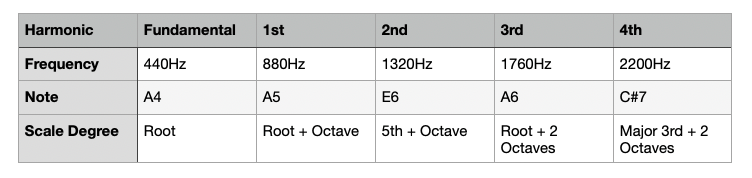
Theres a lot of information in the table above, but the important thing to be aware of is that these frequencies all follow a regular pattern. Because of this, it’s possible for the harmonic exciter to approximate the higher frequencies of a signal without the noise, which results in a bright, clear signal. More complex harmonic exciter plugins (like my personal favourite, Waves’ Cobalt Saphirra) often have EQ built into them, which further lets you shape the high end of signals to really help elements cut through the mix.
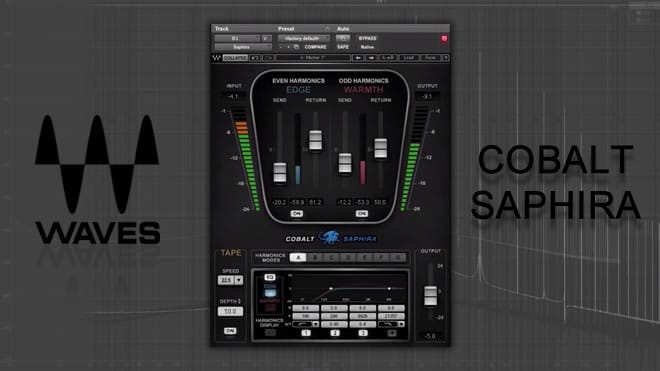
Exciters can also be useful to rescue recordings of poor source material. A recording of a drum kit with bad sounding cymbals is hard to salvage, but by reducing the unpleasant high end in the recording and replacing it with a harmonic exciter it is possible to exchange the brittleness for brightness. Similarly, a cheap, harsh sounding violin could be rescued in the same way.
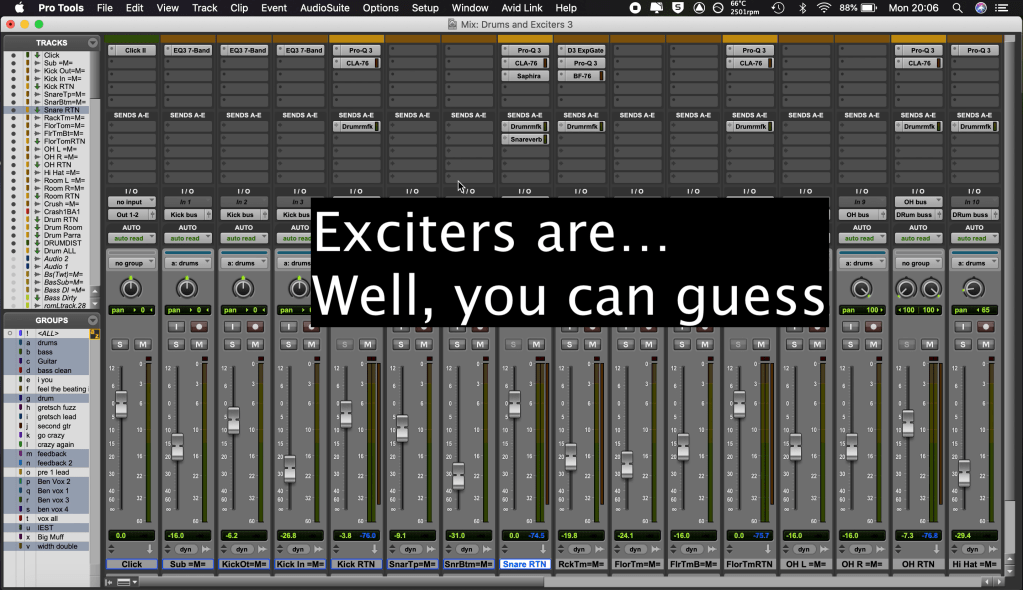
If an element of my mix is almost but not quite perfect, I find that a harmonic exciter is often the cherry on top of the cake. I almost always find myself using them on snare drums for example, to really bring out the crack of the drum, or on the entire mix bus to add that tiny extra bit of air and brightness to a track. As with most tricks its not a replacement for good basic EQ and compression, but I feel that using it to augment a mix can really work wonders.
 Ben Hughes Sound
Leave a comment